
EX_Taiyang Dog Acupuncture Point
Tai-yang 太阳(Taiyang)Professional veterinary acupuncture overview of EX_Taiyang (太阳) in dogs, including anatomical location in the temporal depression, conjunctivitis, optic nerve strain, headache applications, clinical pairings, and safety notes.
| Chinese Name | 太阳 |
| Pinyin | Tài Yáng |
| Meridian | Extra Point (EX) |
| Anatomical Location | In the temporal depression, 1 cun lateral to the eye orbit, in the soft depression of the temple between the outer eyebrow and hairline. In dogs, locate the temple area on the side of the head, about 1 cun lateral to the outer corner of the eye orbit. |
| Main Indications | Conjunctivitis, optic nerve strain, headache, eye pain, eye strain, red/swollen eye, toothache, facial pain, migraines, temporomandibular joint (TMJ) pain, sinus congestion, tinnitus, vision disorders, eye infections, tearing, sensitivity to wind or light. |
| Classical Function | Extra point; Temple Point / Sun Point; eases eye pain and relaxes temples. |
| Meridian Color | Extra Point | Not part of 12 Meridians | Yellow |
Clinical Overview
In veterinary acupuncture practice, EX_Taiyang is an important point for treating eye disorders, headache, and facial pain in dogs.
TCVM practitioners often include EX_Taiyang in protocols aimed at easing eye pain, relaxing the temples, relieving headache, and treating conjunctivitis and optic nerve strain.
Veterinary Disclaimer
This educational content is not intended to replace professional veterinary diagnosis or treatment. Acupuncture and electroacupuncture should only be performed by a licensed veterinarian or certified veterinary acupuncturist.
Temple Point / Sun Point for Eye & Head
EX_Taiyang is an Extra point commonly called the Temple Point or Sun Point (太阳). It is a primary point for conjunctivitis, optic nerve strain, headache, and eye pain in dogs. This point is often used in eye disorder protocols, headache treatment, and facial pain management. EX_Taiyang helps ease eye pain, relax the temples, and dispel wind and heat from the eye and head region.
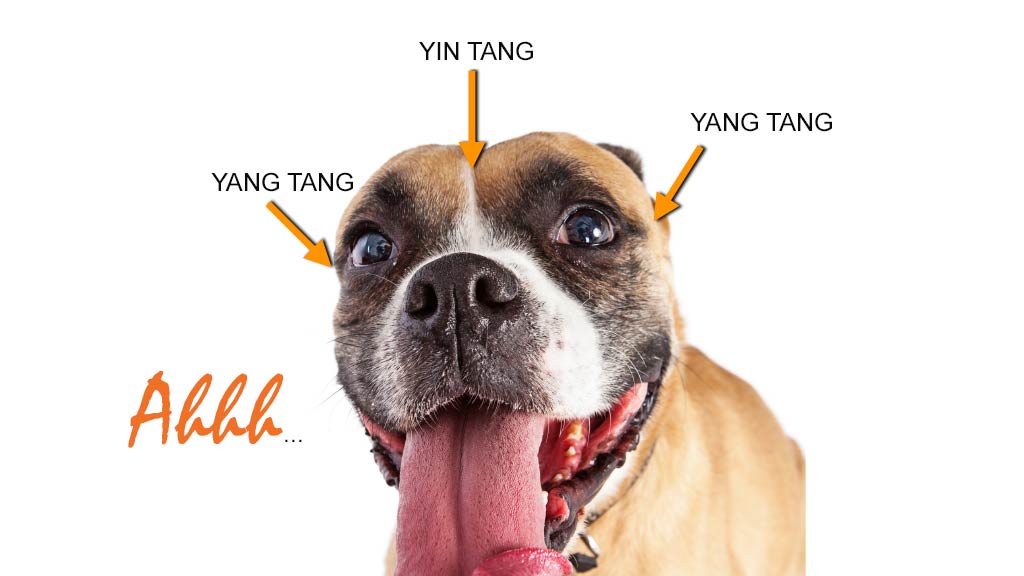
EX_Taiyang (Yangtang) Canine Acupuncture Point
In the image: Yangtang (太阳) is located on the temple area, lateral to the eye orbit. This is EX_Taiyang, the Temple Point/Sun Point for eye and headache disorders.
Pinpoint Location
Anatomical Landmark
On the side of the head, locate the temple area (temporal depression). EX_Taiyang is in the temporal depression, 1 cun lateral to the eye orbit, in the soft depression of the temple between the outer eyebrow and hairline. In dogs, palpate the side of the head on the temple, about 1 cun lateral to the outer corner of the eye orbit, in the soft depression near the hairline.
Primary Clinical Indications
- Conjunctivitis: A classic point for conjunctivitis, eye infections, tearing, and sensitivity to wind or light.
- Optic nerve strain: Frequently used for optic nerve strain, vision disorders, and eye fatigue. EX_Taiyang eases eye pain and reduces strain.
- Headache: Key point for headache, migraines, and facial pain. EX_Taiyang relaxes the temples and dispels wind.
- Eye pain & strain: Commonly included for eye pain, red/swollen eye, toothache, TMJ pain, sinus congestion, and tinnitus.
Recommended Point Pairings
In clinical veterinary acupuncture, EX_Taiyang is often paired with other eye, headache, and face support points depending on presentation.
Frequently paired with BL2 (Zanzhu) and GB20 for eye pain, conjunctivitis, and headache. This combination eases eye pain and relaxes the temples.
Often combined with GV20 (Baihui), GV24 (Shenting), and LI4 for headache, migraines, and facial pain.
May be integrated with LI4, BL2, and TB3 for sinus congestion, tinnitus, and TMJ pain.
Modern Veterinary Interpretation
From a modern veterinary rehabilitation perspective, EX_Taiyang is positioned on the temple and is highly effective for conjunctivitis, optic nerve strain, headache, and facial pain.
Integrative veterinarians may include this point within broader eye disorder, headache, and facial pain support plans involving acupuncture, acupressure, and medical management.
Safety & Needling Notes
Professional Veterinary Use
Because EX_Taiyang is near the eye and temple, needling depth should be minimal. Recommended technique: needle obliquely 0.3–0.5 cun, or use acupressure as a safer alternative.
Gentle Acupressure Guidance
Pet owners exploring supportive acupressure can use gentle, light pressure on the temple area (temporal depression, 1 cun lateral to eye orbit) for 1–2 minutes. This is one of the safer points for home acupressure. Use gentle circular motions or steady pressure, avoiding the eye itself.
Editorial & Veterinary Review
This educational resource was prepared by the PetAcu editorial team using veterinary acupuncture references, TCVM educational materials, canine rehabilitation resources, and integrative veterinary literature.
Canine Acupuncture Atlas
Browse the complete veterinary acupuncture point database for dogs.
Explore Atlas →Dog Conditions That Acupuncture Treats Well
Explore integrative TCVM and acupuncture resources for dogs.
View dog conditions →Find a Veterinary Acupuncturist
Discover integrative veterinary practitioners and rehabilitation clinics.
Browse directory →